Long before formal education, storytelling was used to impart values, lessons, and cultural heritage. For children, stories are not just entertainment. They are a primary way of understanding the world. Through stories, children explore emotions, relationships, and choices in a safe and engaging way.
A story invites a child to listen. It does not demand attention. That difference matters.
Stories Help Children Make Sense of Emotions
Children experience big emotions before they have the words to explain them. Anger. Fear. Jealousy. Pride. Joy.
Stories give those emotions a shape. When a child sees a character struggle, they recognize their own feelings. That recognition builds emotional literacy.
Instead of being told how to feel, children discover that feelings are normal and manageable. This supports emotional regulation and self-awareness.
Learning Through Observation and Imagination
Children learn by watching. Stories provide models for behavior. Characters make choices. Those choices lead to outcomes. Children observe the process without personal risk.
This type of learning is powerful because it engages imagination. The child mentally rehearses situations. What would I do? How would that feel?
Imagination is not separate from learning. It is a key part of it.
Stories Reduce Resistance to Teaching
Direct instruction can trigger resistance, especially when it feels corrective. Stories bypass that resistance. They do not point at the child. They point at a character.
This makes stories especially effective for teaching values. Honesty. Responsibility. Kindness. Respect.
Children are more open to lessons when they feel invited rather than instructed.
Building Moral Understanding Over Time
Moral development is gradual. It grows through repeated exposure to values in different contexts.
Stories support this by presenting similar lessons in varied situations. A child may hear about kindness in one story and honesty in another. Over time, patterns emerge.
Children begin to internalize these values. They start to anticipate consequences. They develop an inner compass.
Strengthening Language and Thinking Skills
Stories also support cognitive development. Listening to stories builds vocabulary, comprehension, and attention. Asking questions about stories encourages critical thinking.
When adults pause and ask, ‘What do you think will happen next?’ children practice making predictions. When asked, ‘Why did the character feel that way?’ children practice perspective-taking.
Creating Connection Between Adults and Children
Shared stories create shared experiences. Reading together builds trust and closeness. It opens space for conversation.
Children are more likely to talk about difficult topics when they arise in a story first. Stories provide a bridge between experience and discussion.
This connection makes guidance easier later. A reference to a familiar story can communicate a lesson quickly and gently.
Storytelling as a Tool for Everyday Guidance
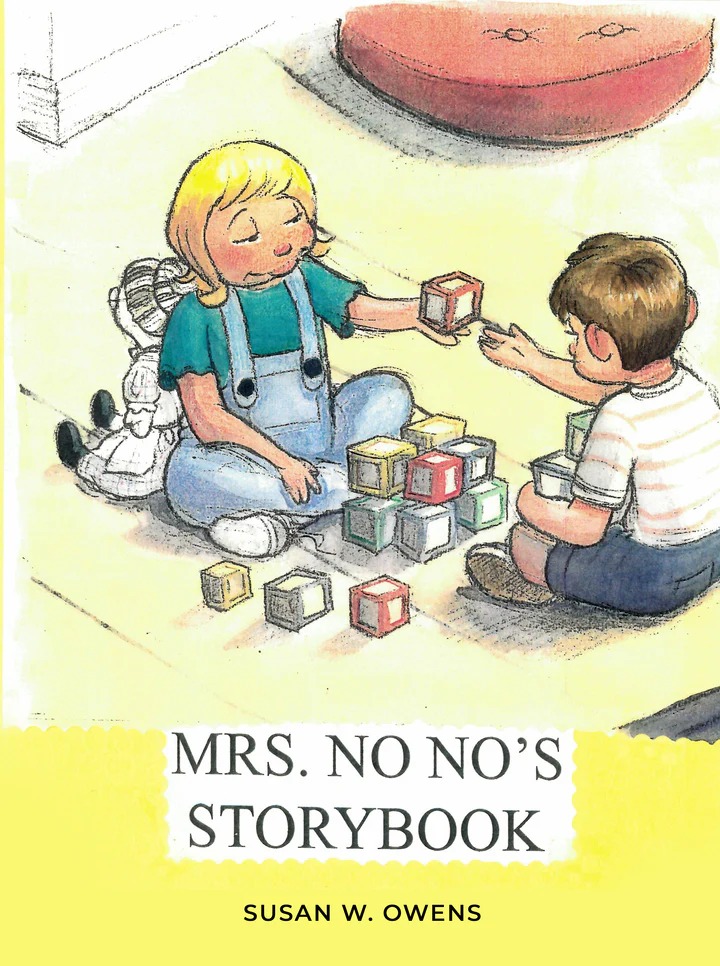
Stories help children carry lessons into their daily lives. In Mrs. No No’s Storybook by Susan W. Owens, Katy’s experiences mirror common childhood challenges. Routines. Choices. Behavior at home and school. The story becomes a reference point. Adults can draw on it during real moments without lecturing. That subtle reinforcement helps children connect story lessons to real decisions and helps them develop empathy, respect, responsibility, and many life values.
Centered on Katy and her special doll (or puppet), Mrs. No No, the story follows everyday situations at home and at school where children often struggle with choices, behavior, and self-control. Instead of punishment or harsh correction, Mrs. No No serves as a calm reminder to pause, reflect, and choose wisely. Through simple language, relatable moments, and positive reinforcement, the book supports the development of respect, responsibility, honesty, and self-esteem. Ideal for both families and classrooms, Mrs. No No’s Storybook offers a nurturing approach to character building that encourages children to develop an inner moral voice they can carry with them as they grow.
Head to Amazon to purchase your copy: https://www.amazon.com/dp/B0FPPJX6DR.
Why Stories Stay With Children?
Children may forget exact words, but they remember characters and feelings. They recall how a story influenced their thoughts and behavior in a particular way. That is why storytelling is one of the most effective tools we have for teaching children about various life values.
When children grow up surrounded by meaningful stories, they carry those lessons forward. Quietly. Naturally. And often when they need them most.